Flying drones near power lines safely under EASA
How to fly a drone safely near power lines: magnetic interference, invisible cables, inspection rules and EASA obligations for pilots in 2026.
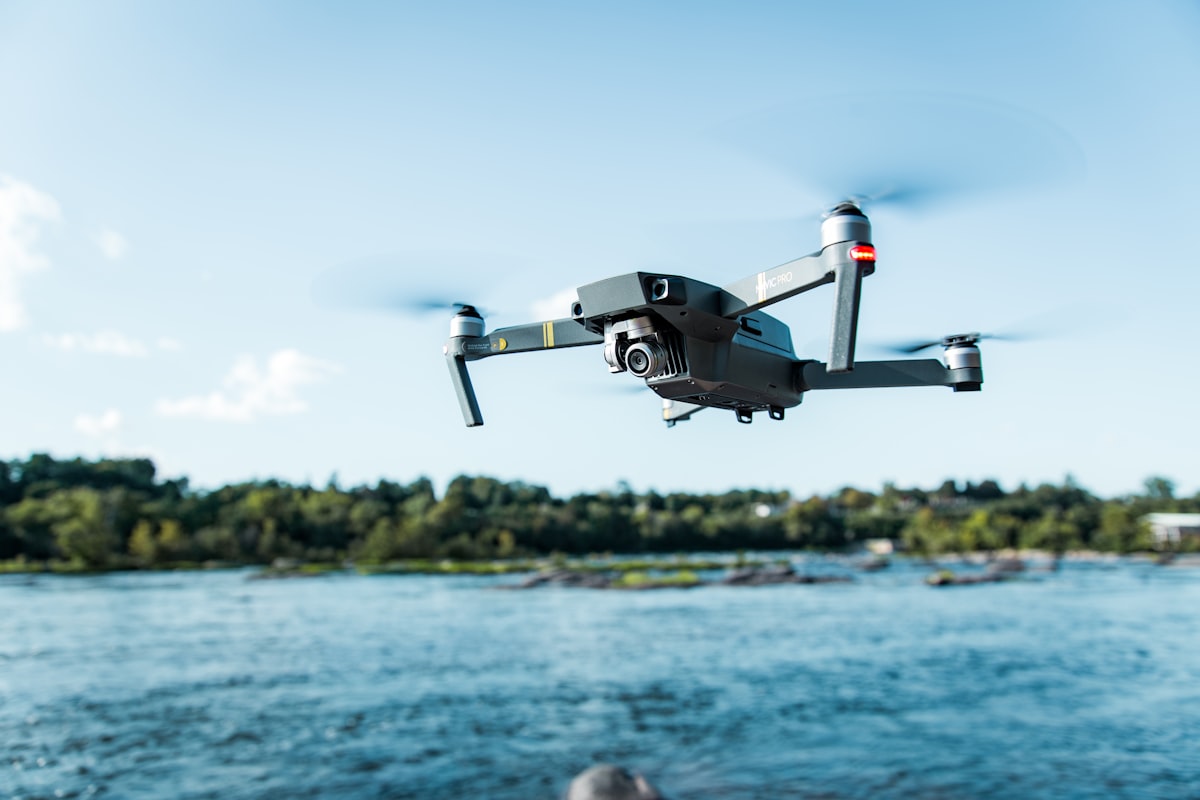
Power lines are one of the most dangerous obstacles a drone can encounter, because thin cables are almost invisible in flight and high-voltage infrastructure can disturb your compass and GPS. EASA rules do not ban flying near power lines, but you remain fully responsible for avoiding a collision, and inspection work close to them usually pushes you into the Specific category.
This guide covers why power lines are so hazardous and how to plan flights around them without losing control or your aircraft.
Why are power lines so dangerous for drones?
Power lines are dangerous because the conductors are thin, high-contrast against the sky in only some conditions, and often invisible against cluttered backgrounds until you are dangerously close. Unlike a building, a cable gives almost no visual warning, and a single strand can bring down your drone instantly.
The core hazards are:
- Near-invisible cables, which blend into terrain, trees and haze.
- Sag and spans that dip lower between towers than you expect.
- Multiple conductors and earth wires at different heights, easy to misjudge.
- Static and induced fields around high-voltage lines that can affect electronics.
Because you often cannot see the cable, you must plan around known infrastructure rather than trusting your eyes to spot it in time. Treat every visible tower as a warning that unseen cables run between it and the next.
How do power lines affect compass and GPS?
High-voltage lines and substations generate magnetic and electromagnetic fields that can disturb your drone’s compass and, in some cases, degrade GPS, leading to drift or erratic behaviour. The closer you fly, the greater the potential for interference, which is exactly where inspection tasks take you.
Effects to anticipate:
- Compass disturbance, which can cause the drone to yaw or drift unexpectedly.
- Toilet-bowl effect, where the drone circles instead of holding position.
- GPS degradation near large structures and conductors.
- Warning messages that may appear only once you are already close.
If your compass is disturbed near a line, the safe response is usually to switch to a manual flight mode you have practised, maintain visual reference and fly away from the interference. Understanding these failure modes is part of the airmanship the dronexamine trainer reinforces alongside the rules.
What EASA rules apply to flying near power lines?
There is no specific EASA ban, but you must keep the drone within your operational category, avoid collisions with obstacles, and often move into the Specific category for close inspection work. The general obligation to fly safely and not endanger people or property applies fully around infrastructure.
As of 2026, the practical picture is:
- Recreational or general flights must simply avoid the lines and stay within category limits.
- Close inspection at short distances often exceeds normal separation and needs a Specific category authorisation.
- The obstacle height exception may apply to tall structures, within tight limits and with the owner’s agreement.
- Geographical zones can restrict flight over certain infrastructure.
Because inspection work brings you deliberately close to hazardous structures, it is usually assessed and approved as a Specific category operation. Confirm the correct category for your task with your national aviation authority (NAA).
How do you plan a safe flight near power lines?
Identify the infrastructure in advance, keep clear horizontal and vertical separation, and never fly under or between conductors casually. Good planning treats the whole corridor of a power line as a hazard zone, not just the visible towers.
A practical approach:
- Survey the site first on foot and from maps to locate every line and tower.
- Note conductor sag, which lowers the cable mid-span between towers.
- Keep generous separation and avoid flying beneath or between conductors.
- Approach from a direction that keeps cables silhouetted against the sky where possible.
- Watch for compass and GPS warnings and be ready to fly away manually.
- Set a return-to-home altitude that clears the towers and cables.
Return-to-home is a particular trap near power lines: if your return altitude is below the cables, an automatic return can fly the drone straight into them. Always account for the tallest infrastructure on the route.
What extra care do inspection missions need?
Inspection missions fly deliberately close to high-value, hazardous infrastructure, so they need a risk assessment, an authorisation where required, and often coordination with the asset owner. This is professional work, and treating it casually risks both your drone and critical infrastructure.
Additional measures for inspection flights:
- Coordinate with the operator of the power infrastructure before flying.
- Assess the electromagnetic environment and expect compass interference near live lines.
- Fly the correct category, typically Specific with an operational authorisation.
- Carry adequate insurance as required nationally for commercial work.
- Have a trained crew, including an observer if the task demands it.
The combination of physical hazard, interference and the value of the asset makes power-line inspection one of the more demanding operations in the drone sector. Prepare accordingly.
Common questions
Can I fly under power lines to get a shot? Avoid it. Flying under or between conductors puts you at high risk of collision with cables you may not see and interference that can cause drift. There is rarely a safe reason to do so for general flying. If a task genuinely requires close work, plan it as a Specific category operation with the asset owner and your NAA.
Will my drone warn me before I hit a power line? Do not rely on it. Obstacle-avoidance sensors often fail to detect thin cables, and warnings about interference may appear only when you are already close. Treat sensors as a backup, not a substitute for planning around known infrastructure and keeping clear separation yourself.
Do I need special permission to inspect power lines? Usually yes. Close inspection typically exceeds normal separation and is assessed as a Specific category operation requiring an operational authorisation. You may also need to coordinate with the infrastructure operator and hold insurance. Confirm the exact requirements with your NAA before taking on inspection work.
Why does my drone drift near substations? Because the strong magnetic and electromagnetic fields there can disturb the compass and GPS, causing drift or circling. This is a known effect near high-voltage infrastructure. Keep your distance, watch for warnings, and be ready to switch to a manual mode and fly away from the interference if the drone starts behaving oddly.
Your next step
Before any flight near power lines, survey the infrastructure, plan generous separation, and set a return-to-home altitude that clears the tallest cables and towers. For inspection work, confirm you have the right category and any authorisation from your NAA, and coordinate with the asset owner. Use the dronexamine safety guides to understand interference and obstacle hazards so your flights around power lines stay controlled and legal.
Related articles
Infrastructure inspection drones, methods and rules
How drones inspect bridges, power lines, towers and roofs, why close-proximity work often needs the Specific category, and how to plan safe inspection flights in 2026.
GPS interference and jamming, flying drones safely
How GPS jamming and interference affect drones, how to recognise it, and how to fly safely when your positioning is unreliable. Practical safety guidance.
Compass and IMU calibration, when and how to do it
When to calibrate your drone compass and IMU, how to do it correctly, and the mistakes that cause drift and toilet-bowling. A practical field guide.