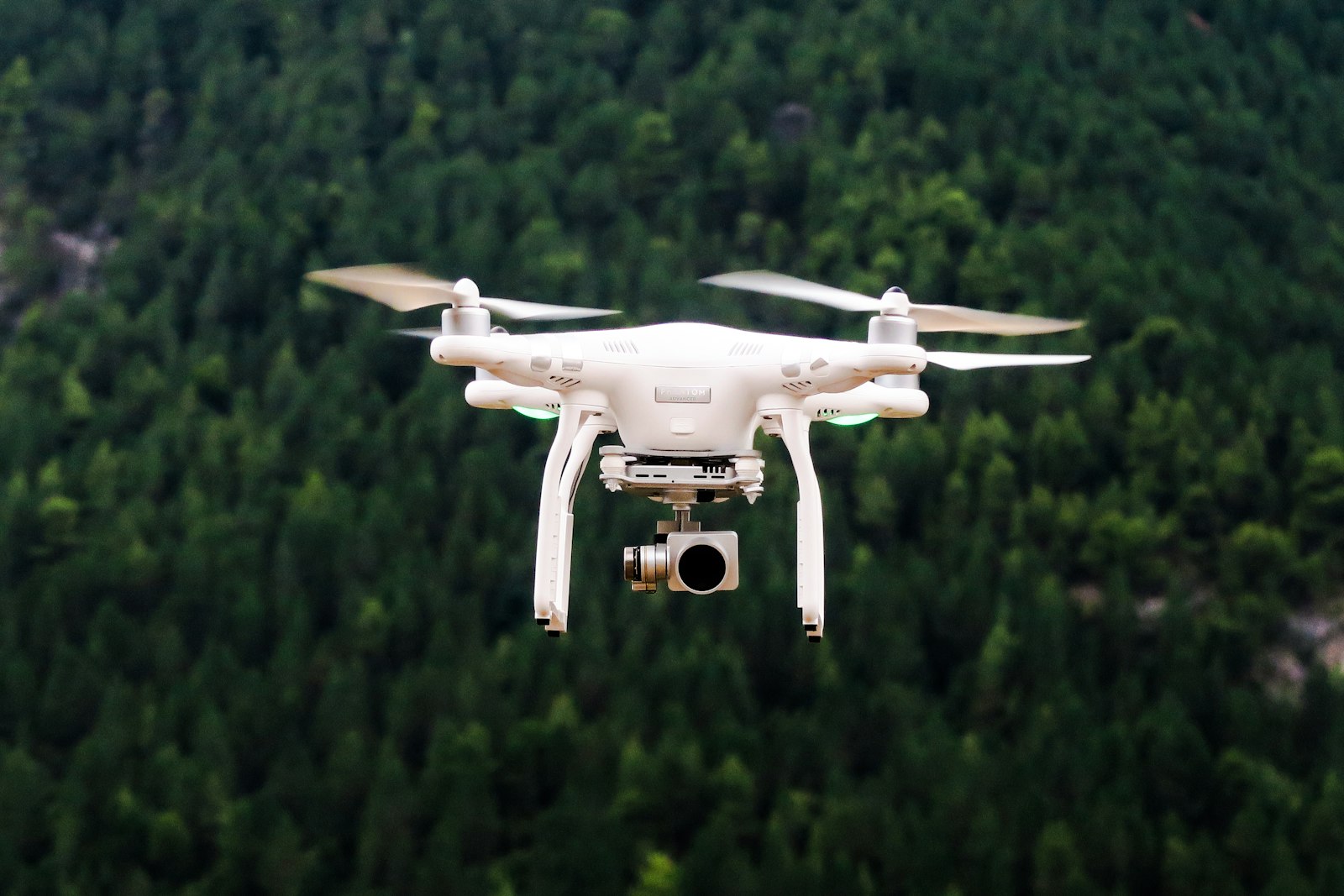
How to get a drone licence under EASA: complete step-by-step guide 2026
From idea to legal flight: register as an operator, pass the free A1/A3 online test, sit the A2 exam, costs and 5-year validity. The full EASA licensing path in one place.
Getting a drone licence under EASA rules takes a few simple steps: you register as an operator, learn the open-category theory and pass the free A1/A3 online test, and if you want to fly closer to people you add the paid A2 exam. The core path is free, you complete it from home, and your certificate is valid for 5 years (as of 2026).
It sounds like a lot of paperwork, but in practice you can handle it in a single evening. This guide walks you through the whole path step by step: from deciding why you want a drone, through choosing your aircraft and learning the theory, to your operator number and first legal flight. Consider it your map for the entire journey.
Step 1: Decide why you want a drone
Before you touch the rules, be honest about what the drone is for, because that decision shapes the rest of your path. A hobbyist taking holiday photos faces different requirements than someone who wants to fly commercially close to crowds.
Recreational flying with a light drone is the simplest route: registration plus the free A1/A3 test usually covers you. Photography and video in a city, near buildings and bystanders, may already call for the A2 exam. Professional work, such as inspections or mapping over urban areas, can even push you into the specific category with its own procedures.
If you are only just catching the flying bug and are not sure the hobby is for you, start with an honest answer about your goal and how much time you can spend. Realistically you need a few evenings for the theory and first flights, not months. Once you know why you want a drone, move on to choosing the right aircraft.
Step 2: Choose your drone and check whether you need registration or a licence
Your drone’s CE class and take-off mass decide how much paperwork you face, so pick the aircraft to match your goal before you buy anything. The lightest drones, under 250 grams in class C0, come with the fewest requirements.
The registration rule is simple: you register as an operator if your drone weighs 250 grams or more, and always if it carries a camera or a sensor capturing personal data, regardless of mass. In practice almost every camera drone requires operator registration. Whether you also need to pass an exam depends on the CE class and the subcategory you want to fly in.
Drones sold today carry a class label from C0 to C4. A C0 model up to 250 grams gives you the most freedom and lets you fly in subcategory A1, class C1 also fits A1 with some limits, while heavier C2, C3 and C4 classes require more distance from people or extra qualifications, including the A2 exam. Choosing your drone deliberately tells you in advance which certificate you will need.
Step 3: Understand the A1/A3 and A2 categories
The open category is split into subcategories that define how close to people you may fly, and they determine which exam you sit. For most beginners the free A1/A3 route is enough, and you only add A2 when you want to fly nearer to uninvolved people.
Subcategories A1 and A3 are the foundation. A1 lets you fly near people with a light drone, while A3 covers flights far from people and built-up areas. You earn these through free training and an online test, without leaving home. This is the route most pilots take.
Subcategory A2 lets you fly a heavier drone closer to people while keeping a safe distance, and it requires an additional, paid A2 exam at a recognised training entity. If you are torn between the routes, in most cases start with A1/A3 and reach for A2 only when you genuinely need to fly in denser surroundings. The specific category is a separate, more complex level for higher-risk operations, and most pilots never need it.
Step 4: Learn the theory for the exam
Open-category theory is built on published EASA rules, so the material is predictable and you can master it in a few focused evenings. The key areas are the requirements of Regulation 2019/947, drone classes C0-C6, visual-line-of-sight (VLOS) flight, geographical zones and flight safety.
For the A1/A3 exam a solid pass through the subcategory rules, altitude and distance limits, and safety basics is enough. The A2 exam is harder and demands deeper understanding of meteorology, risk mitigation, drone performance and procedures for flying closer to people. In both cases you do not need to memorise blindly, you just need to grasp the logic behind the rules.
You learn most effectively by answering questions under conditions close to the real test, not just by reading theory. That is exactly what dronexamine is for: it offers structured open-category material plus A1/A3 and A2 practice exams with questions in a format close to the official test. A few completed sets mean you walk into the exam knowing the question format and confident about the pass mark, instead of guessing what to expect. It is the simplest way to avoid failing right at the threshold.
Step 5: Where and how to sit the exam
You sit the A1/A3 exam for free online through your national aviation authority’s platform, while the A2 exam takes place at a recognised training entity for a fee. These are two different routes, so it helps to know what each one involves.
The A1/A3 route works like this: you create an account with your national authority and verify your identity, register as a UAS operator, complete the free online training, and then answer a test of typically 40 questions in a limited time. You need to reach the required pass mark, commonly 75%. Once you pass, you download your remote pilot competency certificate straight from your account. You pay nothing and you go nowhere.
The A2 exam runs differently: you first complete self-study and, where the training entity requires it, practical self-training, then sit a theory exam either on site or in a supervised online format. The A2 exam is paid, and its price depends on the recognised entity you choose. It is the only mandatory cost on this path, because operator registration and the A1/A3 exam stay free.
Step 6: After the exam, your first legal flights
A pass is not quite the end of the formalities: before your first flight, put your operator number on the drone and keep your competency certificate available in case of a check. You receive your operator number when you register, and it identifies you as the aircraft’s operator.
The competency certificate is valid for 5 years from the date you pass. Before it expires you renew it by taking the test again, and for A1/A3 that renewal is free as well. Plan the renewal ahead of time so you avoid a gap in your qualifications, because flying on an expired certificate means flying without the required licence.
Before you take off, check the geographical zones where you plan to fly, make sure you stay within visual line of sight, and respect the altitude and distance-from-people limits that match your subcategory. If your drone has a camera, keep privacy rules in mind too. Fly your first flights in open terrain away from buildings so you can get comfortable with the aircraft, and only then move closer to people within the bounds of your qualifications.
Frequently asked questions
Do I need a licence to fly a drone recreationally?
For recreational open-category flights you need operator registration and a passed A1/A3 exam if your drone has a camera or a take-off mass of 250 grams or more. The A1/A3 exam is free and you take it online through your national authority. The only exception is very light toy drones without a camera, which fall under lighter rules. In practice almost every camera drone requires registration and a basic qualification.
How much does a drone licence cost?
The core path is free: operator registration and the A1/A3 exam cost nothing. Only the A2 exam is paid, and its price depends on the recognised training entity. To your real budget you should add liability insurance and any study materials. For most hobbyists the total cost of formalities is zero, because the A1/A3 route is all they need.
How long does it take to get an A1/A3 licence?
With steady study the whole process takes one to a few evenings. Operator registration and the online training are an hour’s work, and the A1/A3 test itself is time-limited to a short window. You will spend the most time learning the theory, but the material is predictable and based on published EASA rules. A few completed practice sets are usually enough to sit the exam with confidence.
What is the difference between the A1/A3 and A2 exams?
The A1/A3 exam is free, taken online, and qualifies you to fly a light drone near people or a heavier one far from them. The A2 exam is paid, taken at a recognised training entity, and lets you fly a heavier drone closer to uninvolved people while keeping a safe distance. A2 demands deeper knowledge, including meteorology and risk mitigation. Most beginners start with A1/A3.
How long is a drone licence valid?
The open-category remote pilot competency certificate is valid for 5 years from the exam date. After that you renew it by taking the test again, and for A1/A3 that renewal is also free. Plan the renewal before it expires to avoid a gap in your qualifications and to avoid flying on an invalid document during any inspection.
Want to pass your drone exam?
Learn with the interactive course, practise on EASA-aligned questions and take mock exams. Start for free.
Go to the course →Related articles
How to pass the A2 drone exam, a practical guide
How many questions, what pass mark, how to prepare and what to expect on the A2 exam. A concrete, step-by-step preparation plan.
Registering as a drone operator, where to start
When you must register as an operator, where to do it and how operator differs from pilot. The first steps before you take off.
A1/A3 or A2, which drone certificate do you need?
A simple guide to the EASA open category subcategories. Find out which drone pilot certificate fits your aircraft and the way you fly.